Coffee Table Dimensions Guide: How to Pick the Perfect Height, Size & Shape for Your Living Room

You have picked the sofa, settled on the wall colors, and finalized your living room layout. Then comes the centerpiece: the coffee table.
On paper, picking a table sounds straightforward. In practice, it is where many living rooms go slightly off-balance. Choose one that is an inch too tall, and reaching for a glass of water feels awkward. Pick one that is too wide, and your natural walkway through the room vanishes.
Finding the right coffee table is not about following rigid interior decor dogma; it is about proportions, flow, and how your household actually uses the room every day.
Here is a practical, dimension-by-dimension guide to choosing a coffee table that fits naturally into your space.
1. The Height Rule: Match Your Sofa Cushions
The most common mistake when choosing a center table is picking a piece purely for its looks without checking its profile against the sofa seat.
A coffee table should never sit higher than the top of your sofa cushions. If it rises above the cushion line, it interrupts the visual sightline of the room and makes setting down a cup or book feel unnatural.
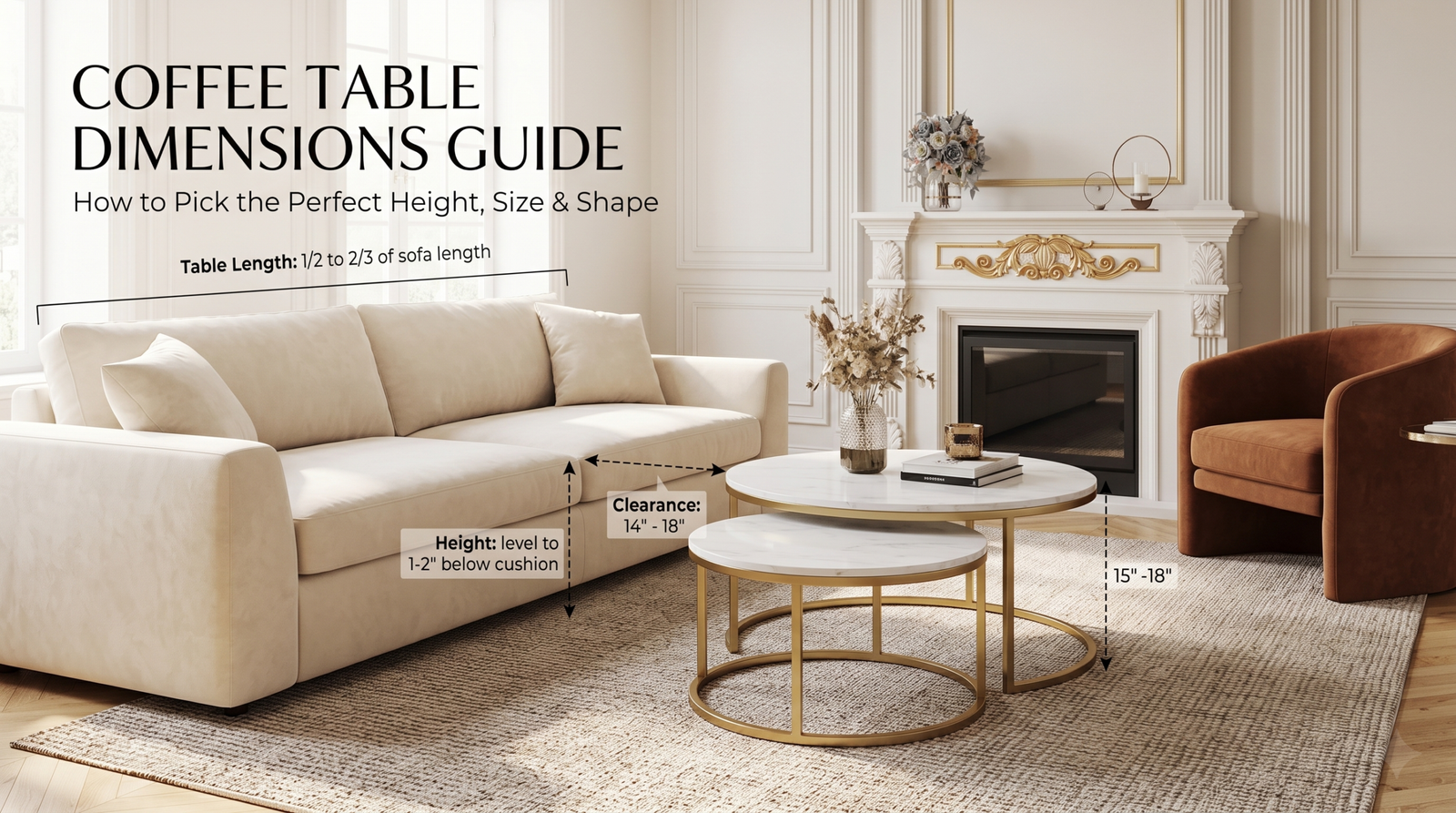
- The Golden Standard: Your table should sit level with your sofa seat, or roughly 1 to 2 inches lower.
- Standard Measurements: Most modern sofa seats sit between 16 and 18 inches (40 to 45 cm) off the floor. Consequently, a well-proportioned coffee table generally stands between 15 and 18 inches high.
- Low-Profile Living: If you own a contemporary, deep-seated lounge sofa, pair it with a low-profile coffee table measuring roughly 12 to 14 inches in height to maintain grounded, clean lines.
2. Length & Scale: The Two-Thirds Rule
A coffee table should anchor your seating arrangement, not overwhelm it or look like a floating coaster in a sea of rug space.
To strike the right visual balance, use the two-thirds proportion:
Ideal Table Length ≈ Two-Thirds (2/3) × Sofa Seating Length
- If your sofa is 84 inches (7 feet) long, aim for a coffee table length between 48 and 56 inches.
- For compact, three-seater sofas measuring around 72 inches, a coffee table between 36 and 44 inches keeps the setup proportional.
- If you have an L-shaped sectional, do not measure the total length of the back. Measure only the main open seating section between the edge and the chaise to avoid crowding the lounge corner.
3. Clearance and Walkways: The Breathing Room You Cannot Skip
A beautiful table quickly turns into a frustration if your knees constantly bump against the edge or if getting up requires an awkward side-step.
Before finalizing any purchase, test your floor clearance with painter’s tape:
- Sofa-to-Table Gap: Maintain 14 to 18 inches (35 to 45 cm) between the sofa edge and the table. This provides plenty of legroom to stretch while keeping drinks, remotes, and books within comfortable arm’s reach without leaning forward.
- Passage & Walkways: Ensure at least 24 to 30 inches (60 to 75 cm) of clear walkway between the outer edge of your coffee table and surrounding furniture (such as TV consoles, sideboards, or accent chairs). High-traffic paths through the living room should ideally have a clear 36-inch path.
4. Choosing the Shape: Matching Your Seating Layout
The footprint of your sofa dictates which table geometry functions best in your room.
| Room / Sofa Setup | Recommended Table Shape | Why It Works |
|---|---|---|
| Standard 3-Seater | Rectangular or Oval | Mirrors long horizontal sightlines cleanly |
| L-Shaped / Chaise | Round or Square | Fits neatly into the open corner nook without crowding the chaise |
| Compact / Studio | Round Nesting Sets | Eliminates sharp corners and provides flexible surface area |
| Symmetrical Layout | Large Square or Paired Round | Balances facing armchairs and loveseats evenly |
Rectangular and Oval Tables
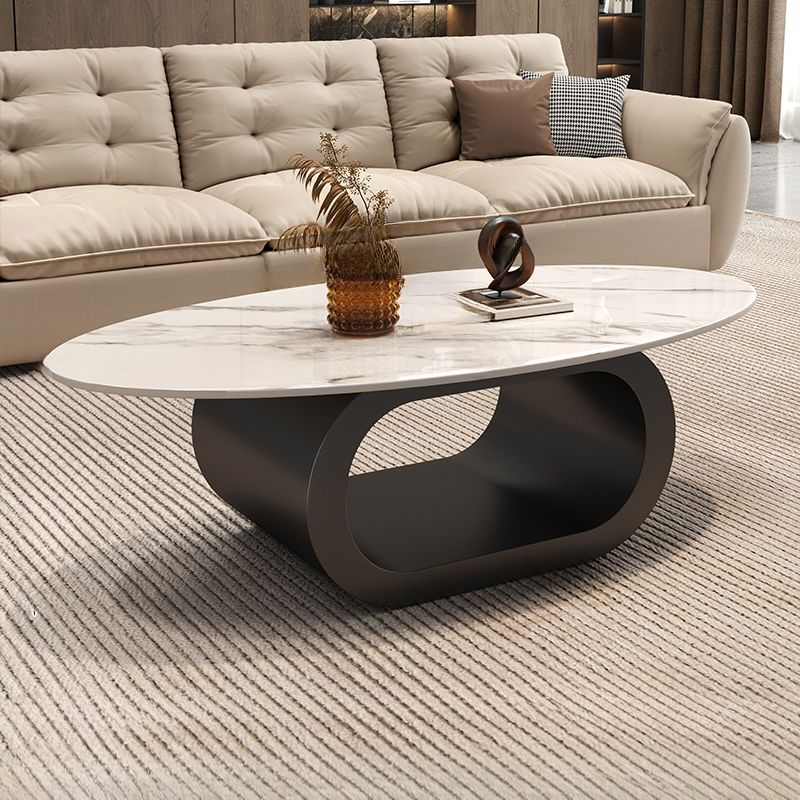
Rectangular tables are the classic partner for standard linear three- or four-seater sofas. They provide plenty of surface area along the entire seating run. If your room has tight foot traffic, an oval shape offers the same functional length while eliminating sharp 90-degree corners, creating a safer walkway for homes with young children or pets.
Round and Nesting Tables
Round tables soften rooms that have an abundance of clean, straight edges—such as boxy sofas, rectangular media consoles, and square area rugs.
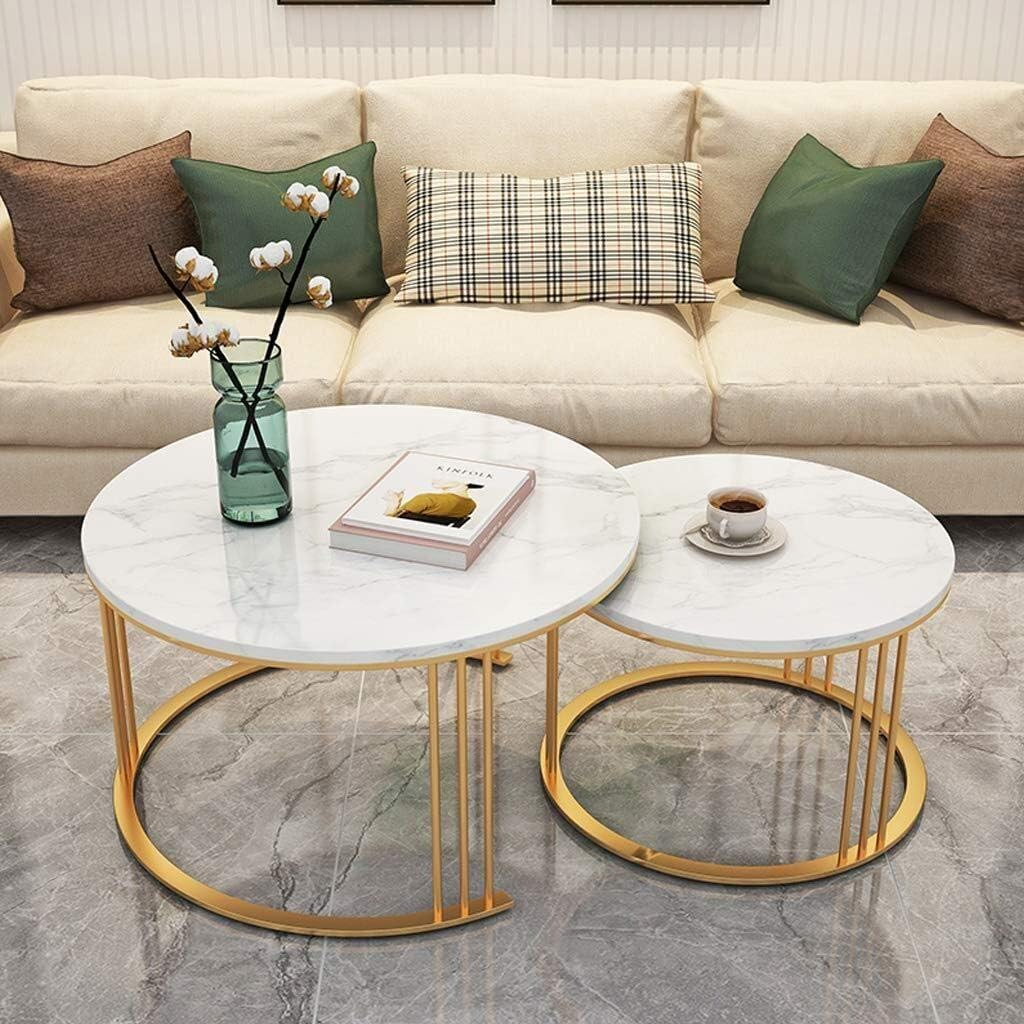
For modern homes and apartments, round nesting coffee table sets have become a design favorite for good reason:
- Configurable Footprint: Keep them nested to save floor area on regular days, then pull the secondary table out when entertaining guests.
- Tiered Height: The subtle height drop between the primary and secondary table adds architectural depth and natural layering to the center of the room.
- Fluid Circulation: Without corners, traffic glides naturally around curved profiles, making smaller living areas feel significantly larger.
5. Material Weight: Visual Mass vs. Physical Footprint
Dimensions alone do not tell the whole story; the visual weight of the materials matters just as much.
- Heavier Visual Weight (Solid Bases & Dark Stone): Chunky wooden blocks or dark, solid-sided drum tables dominate visual space. They work best in large, open-concept living rooms with high ceilings.
- Lighter Visual Weight (Open Metal Frames & Polished Tops): If you are working with an everyday apartment or a cozy room, opt for tables with open architectural metal bases, such as slimline stainless steel frames in brushed gold or matte black.
- Light Tops: Pairing an airy base with a light nano-marble top or fluted glass keeps the floor visible underneath. This trick helps the eye perceive more square footage without sacrificing table surface area.
Quick Pre-Purchase Checklist
Before placing your order, walk through this quick 30-second checklist:
- Measure cushion height: Is the table top level with or 1 to 2 inches lower than your sofa cushion?
- Check the 2/3 ratio: Does the table span between one-half and two-thirds the length of your sofa seating?
- Test the knee gap: Have you marked out a 14- to 18-inch border between the couch and the table perimeter?
- Walk the room: Can everyone walk freely from the entryway to the balcony or hallway without swerving around corners?
A well-proportioned coffee table ties your living room together, serving as both a functional surface for daily living and a sculptural centerpiece you enjoy looking at every time you walk into the room.
Frequently Asked Questions About Coffee Table Sizing
How high should a coffee table be compared to the sofa?
Your coffee table surface should sit level with your sofa seat cushion or roughly 1 to 2 inches lower. Standard sofa seats are 16 to 18 inches off the floor, making a table height of 15 to 18 inches ideal for everyday comfort.
How much space should be left between a sofa and a coffee table?
Leave a clearance of 14 to 18 inches (35 to 45 cm) between the front edge of the sofa and the coffee table. This leaves comfortable legroom while keeping drinks, books, and remotes easily accessible without bending forward.
What shape coffee table is best for an L-shaped sectional?
Round or square coffee tables work best with L-shaped sectionals. Their symmetrical footprint fits naturally into the open nook of the chaise without obstructing pathways or creating narrow bottlenecks.
What is the two-thirds rule for coffee tables?
The two-thirds rule states that the total length of your coffee table should equal approximately two-thirds (60% to 66%) of your sofa’s total seating length. This ensures the table anchors the room without overpowering the seating area.
Recommended products
-
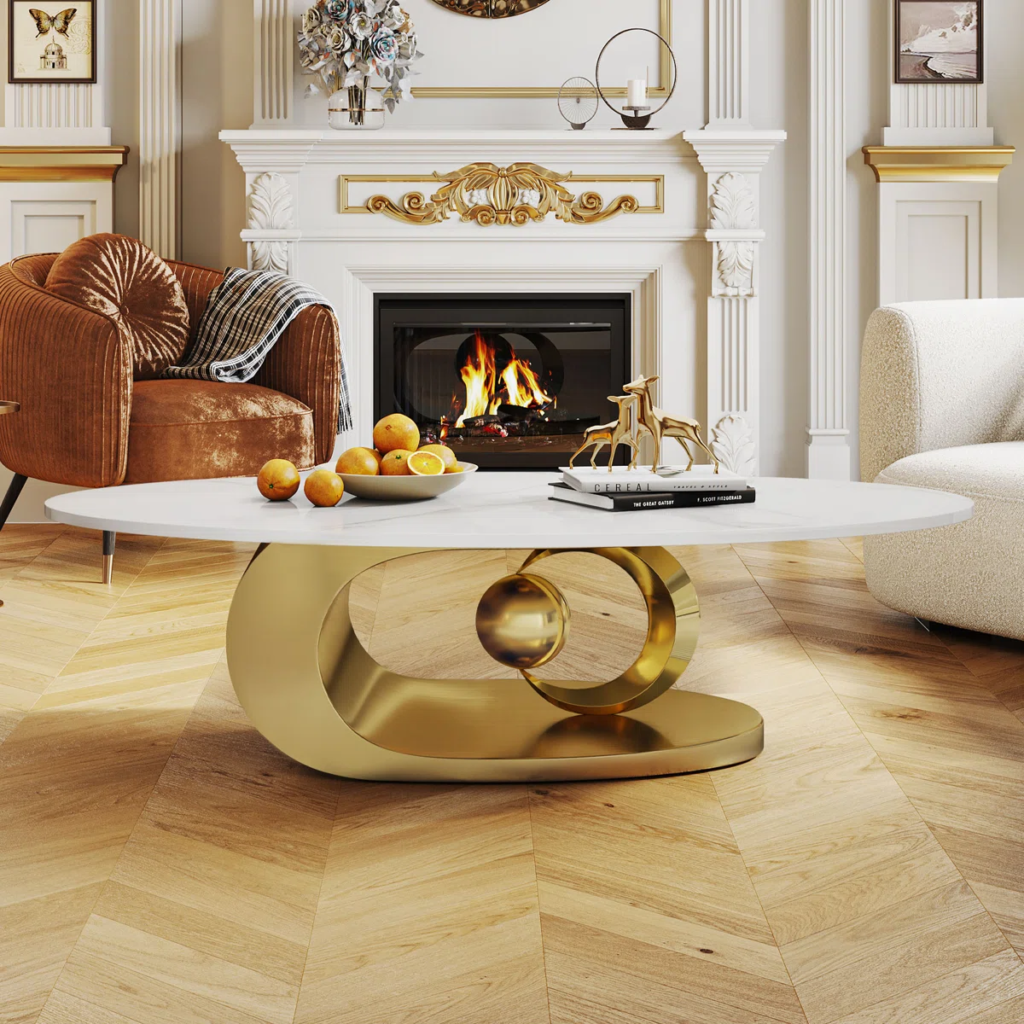
Modanio Astra Luna Oval Coffee Table | Nano Marble Top & SS 304 PVD Gold Crescent Base
Original price was: ₹64,999.₹28,499Current price is: ₹28,499. -
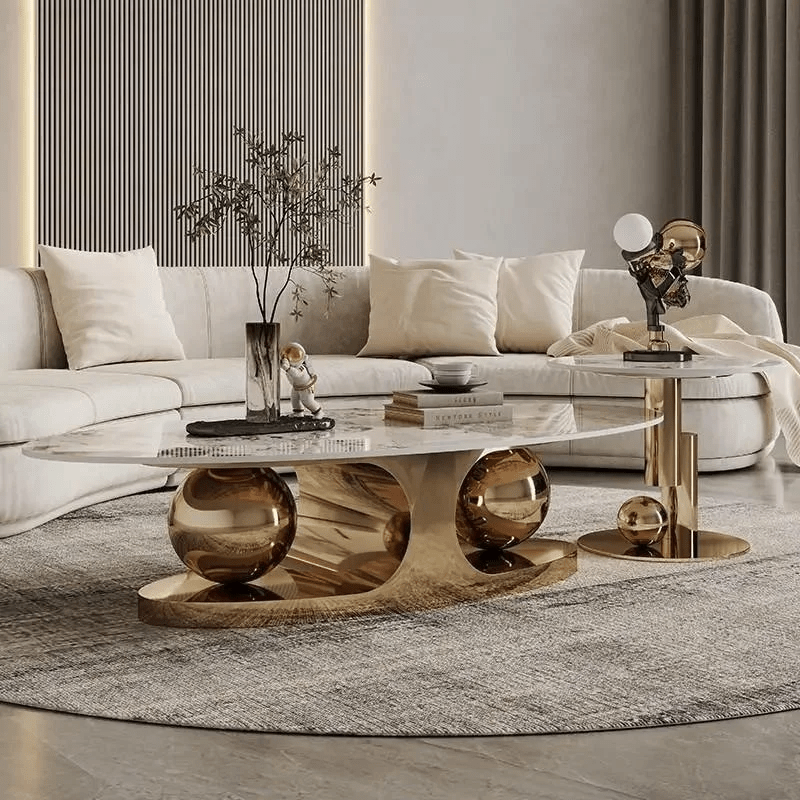
Modanio Celestial Balls Oval Coffee Table | Nano Marble Top & SS 304 PVD Gold Base
Original price was: ₹59,999.₹29,999Current price is: ₹29,999. -
Modanio Luxurious Round Marble Coffee Table Set of 2 | SS 304 PVD Gold Nesting Tables
Original price was: ₹39,999.₹17,999Current price is: ₹17,999. -
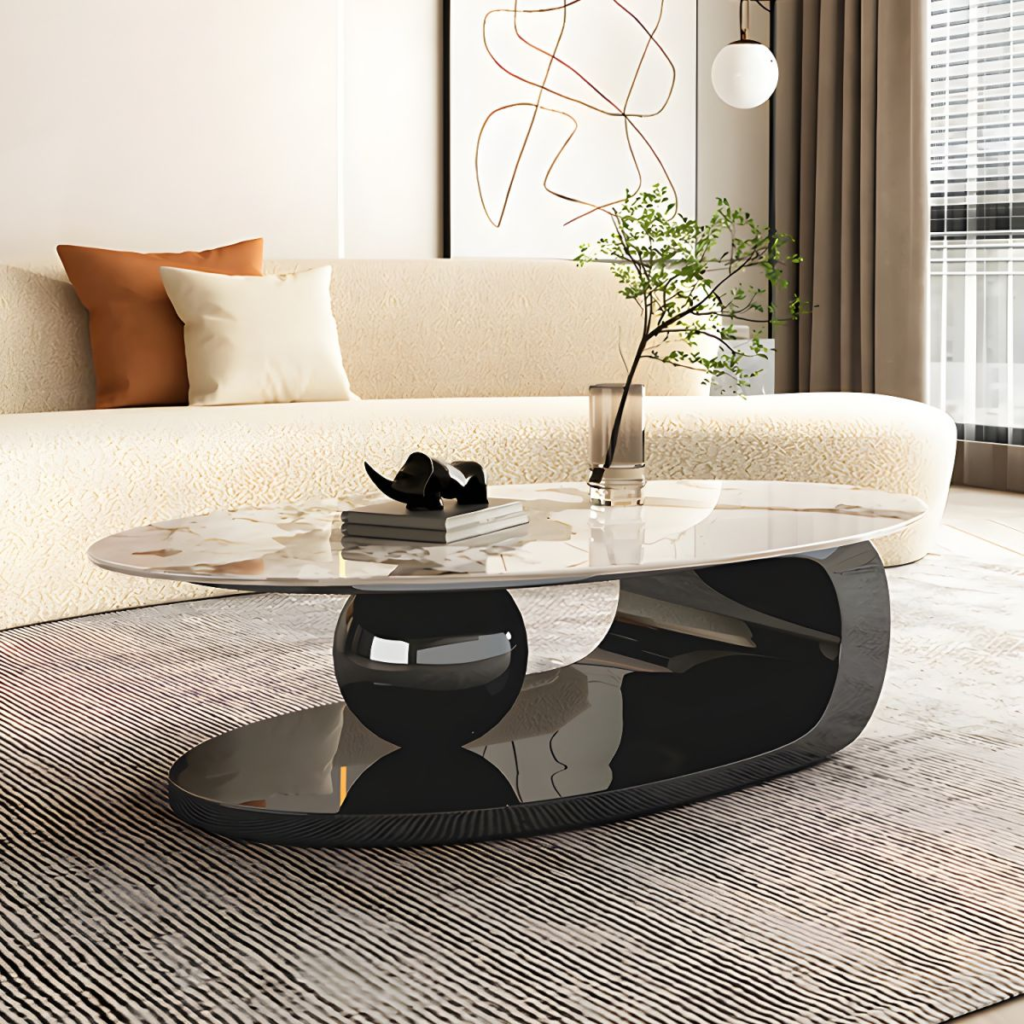
Modanio Luxury Oval Coffee Table for Living Room | Nano Marble Top & SS 304 PVD Finish
Original price was: ₹49,999.₹24,999Current price is: ₹24,999. -
Modanio Oval Coffee Table with Marble Top | Modern Powder-Coated Metal Centre Table
Original price was: ₹29,999.₹14,999Current price is: ₹14,999.